Fish enthusiasts and aquarists alike have long sought reliable references for identifying and understanding the myriad species that populate both oceans and lakes. Recent releases of detailed fish charts provide a concise, visual resource that makes it easier to classify and care for these aquatic creatures. By combining taxonomy, habitat, and key identification marks, these charts become indispensable tools for hobbyists and professionals in the same way a well‑crafted diagram serves a seasoned engineer.
Why Fish Charts Matter for Aquarists and Researchers
Accurate identification is the first step in ensuring proper care. Different species require distinct water parameters, diets, and tank mates. A comprehensive chart reduces the risk of mislabeling and helps prevent costly mistakes—such as introducing a saltwater species into a freshwater setup or overlooking the specific breeding habits of a tropical fish.
Beyond hobbyist use, fisheries scientists, marine biologists, and conservationists depend on clear visuals to track population changes, document invasive species, and assess ecological health. An easily readable chart bridges the gap between raw data and practical application, accelerating fieldwork and improving public education efforts.
Common Saltwater and Freshwater Species at a Glance
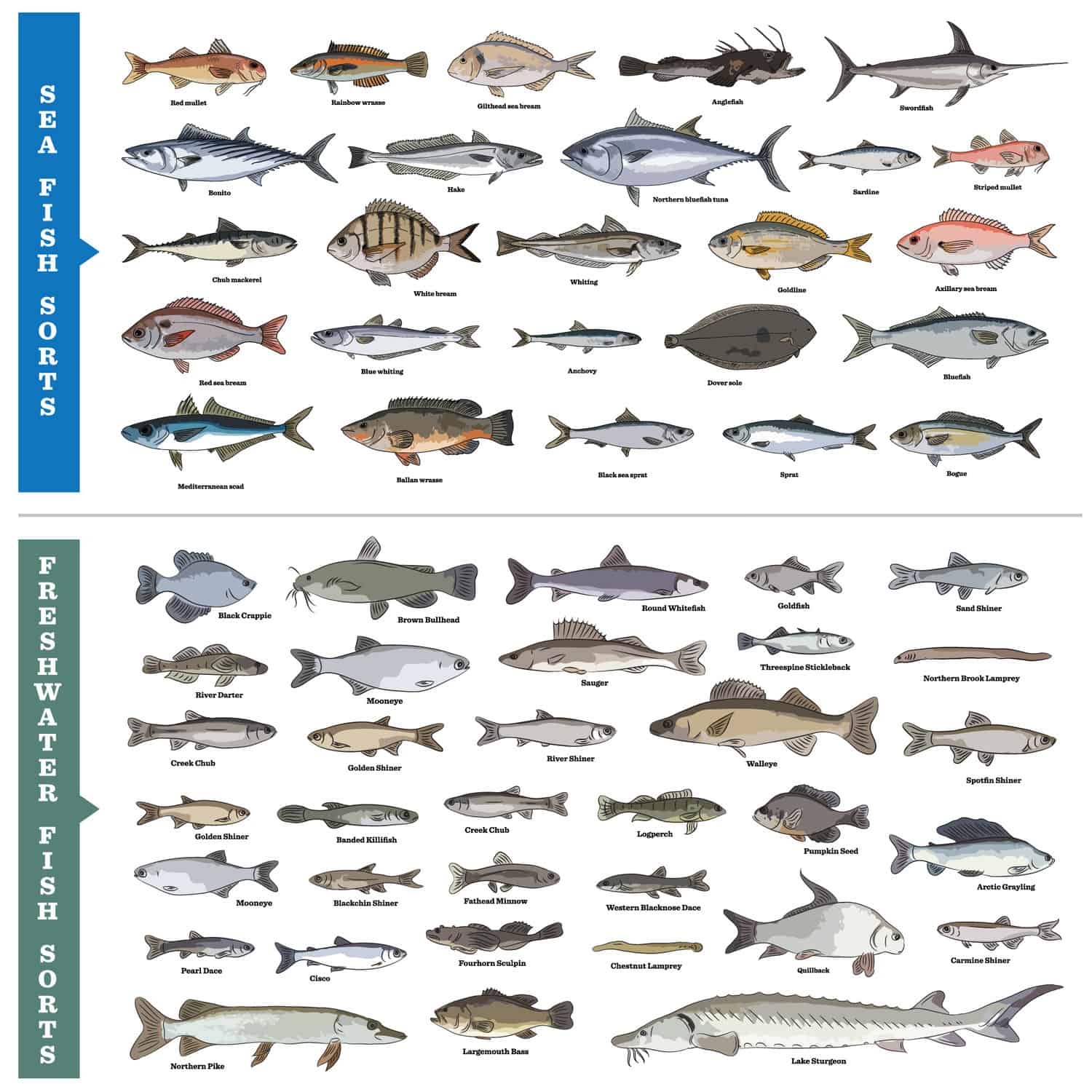
The first chart offers a side‑by‑side comparison of 50 species, ranging from the ubiquitous goldfish to the flamboyant clownfish. Key features such as body shape, coloration, and fin arrangement are highlighted, enabling quick differentiation even for beginners.
- Goldfish (Carassius auratus) – Found in freshwater, known for its varied coloration.
- Great White Shark (Carcharodon carcharias) – A saltwater apex predator, recognizable by its robust body and dorsal fin placement.
- Moorish Idol (Zanclus cornutus) – Popular in reef tanks; distinct black and white striping.
By organizing species under clear categories, the chart helps aquarists choose compatible species and avoid common pitfalls such as overcrowding or incompatible water chemistry.
Highlights from the Tropical Fish Species Chart

The second image focuses on tropical varieties, presenting a comparative view of body size, color patterns, and habitat preferences. This visual aids hobbyists in selecting fish that thrive under similar lighting and temperature conditions.
- Clownfish – bright orange with white stripes; thrives in warm, brackish water.
- Angelfish – deep blue or green; requires high-quality filtration.
- Betta (Siamese fighting fish) – known for its flamboyant fins; prefers shallow, warm freshwater environments.
By juxtaposing these species side‑by‑side, the chart illuminates subtle distinctions that could influence tank setup, feeding schedules, and overall fish health.
Integrating Fish Charts into Your Aquatic Setup
Once you have identified your target species using these charts, you can streamline your aquarium management:
- Match the habitat: Use the chart’s water‑type column to ensure each species receives the correct salinity level.
- Plan the diet: Species-specific feeding recommendations can be cross‑checked against the chart’s body shape and fin characteristics.
- Monitor growth: Charting growth stages helps you anticipate space needs and anticipate breeding cycles.
Implications for Conservation and Education
Beyond individual tanks, these charts serve as educational tools in schools and museums. By presenting a visual taxonomy, they encourage curiosity and provide a baseline for citizen science projects, such as local biodiversity surveys. In conservation contexts, accurate species identification is crucial for monitoring endangered populations and implementing protective regulations.
Final Thoughts
Whether you are a novice fishkeeper, a seasoned aquarist, or a marine researcher, a well‑designed fish chart can transform the way you interact with aquatic life. These visuals not only streamline identification but also support healthier, more sustainable aquariums and more informed conservation efforts. As the popularity of home aquaria grows, the demand for clear, accessible charts will continue to rise—making these resources essential for anyone looking to master their underwater world.